
How Big Can a Window Go? A Guide to Large & Picture Windows
A bigger window isn't just a wider hole in the wall — past a certain size, it's a different structural problem. Here's what actually makes large-format glazing possible.
A "big window" sounds like a simple upsize of a normal one, but past a certain size, it stops being the same product. More glass means more wind load pushing on the frame, more weight for the frame to carry, and more risk of the whole unit flexing if it isn't engineered for the span.
Aluminium is what makes large-format glazing practical in the first place. Its strength-to-weight ratio keeps a frame slim even as the glass panel grows, which is why picture windows, glass-to-glass corner windows, and wide sliding or folding configurations are almost always aluminium rather than timber or uPVC — those materials need thicker frames to carry the same span, which defeats the point of going big at all.
Glass-to-glass corner windows take this furthest, removing the vertical frame member at a corner entirely so two glass panels meet directly with no visible break in the view. It's a genuinely different engineering problem — the load that member used to carry has to be redirected elsewhere in the structure — which is why it deserves proper engineering rather than an on-site improvisation.
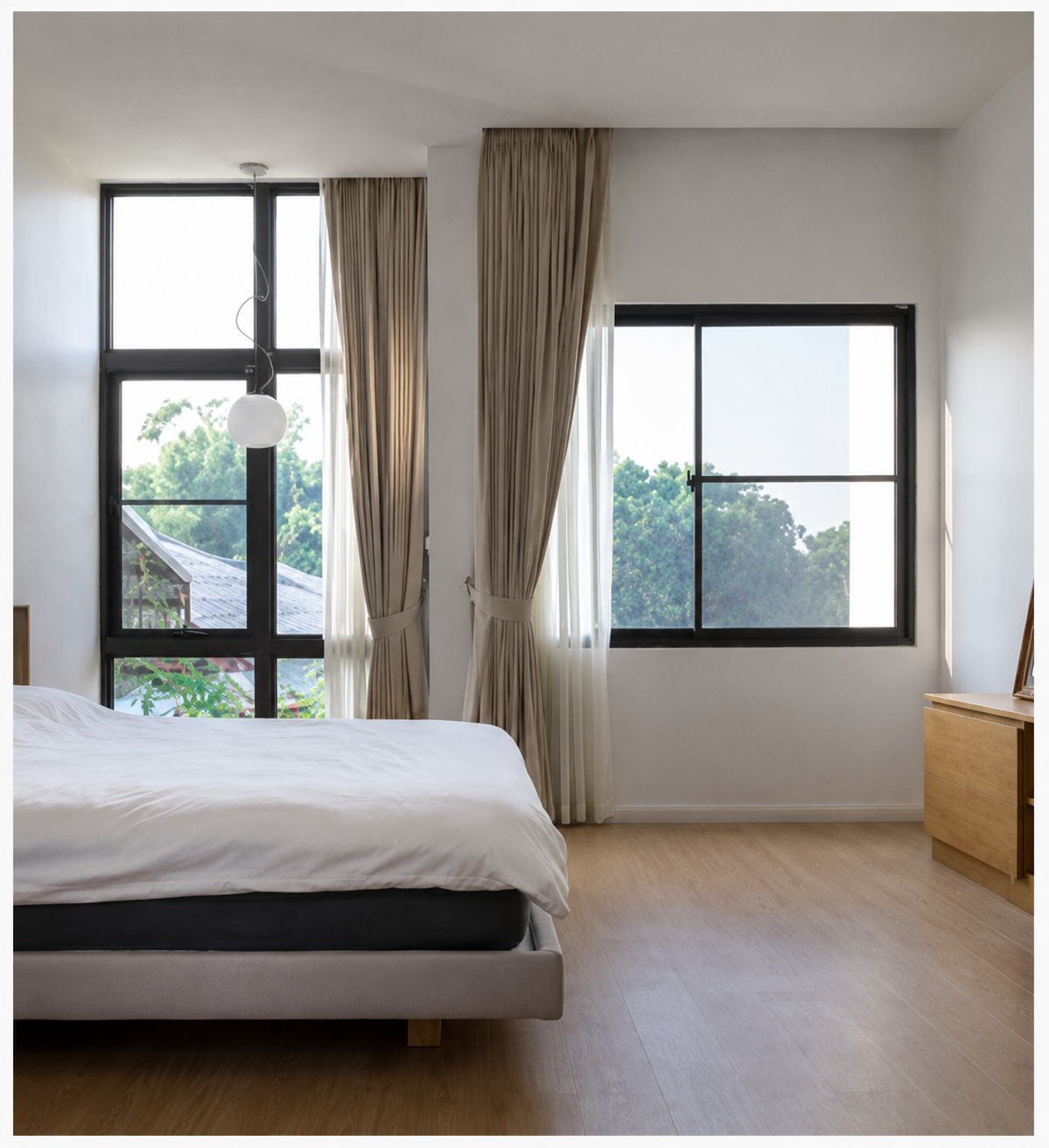
If a room is built around a view — a skyline, a garden, water — the frame should be the last thing anyone notices. Fixed windows give maximum glass with zero moving parts, glass-to-glass corners let a view wrap around a room, and a wide folding or sliding configuration works where the whole wall needs to open. The right choice comes down to whether the room needs to open at all, or just needs to disappear.