

Architectural Aluminium Windows: What the Term Actually Means
"Architectural window" isn't a spec sheet term — it describes a role a window plays in a building's design. Here's what actually earns it that label.
"Architectural window" doesn't refer to a specific product — it describes a role. A window earns the label when it's chosen and detailed as part of a building's facade design, not just dropped into an opening for ventilation and light. The distinction matters more in practice than it sounds: an architectural window is expected to disappear visually, letting the glass and the building's lines do the work.
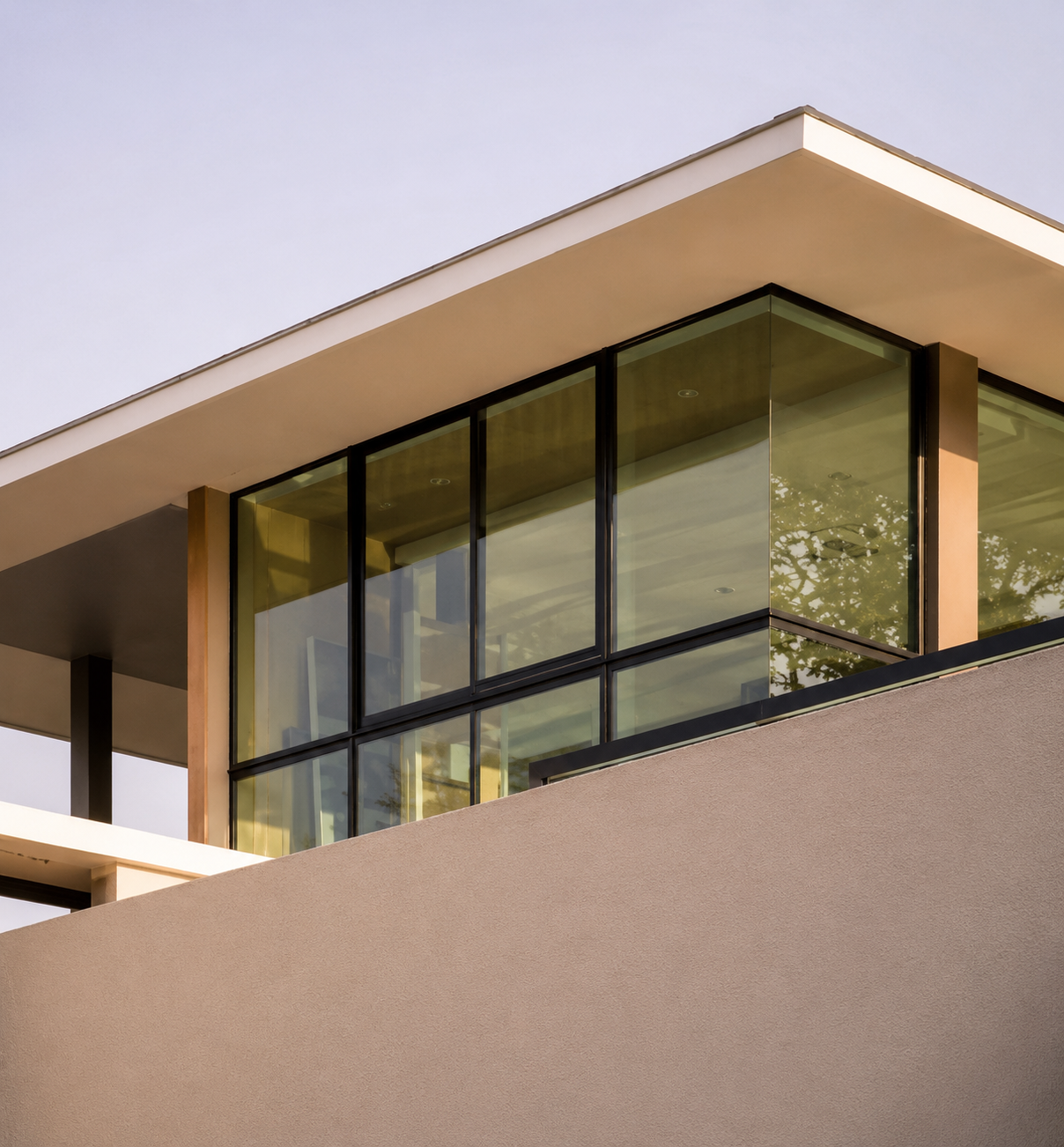
In practice, that means narrow sightlines, large glass panels, and as little visible frame as possible. Fixed windows and glass-to-glass corner windows are the two systems most often chosen for architectural work, since both maximise glass area — a corner window in particular removes the vertical frame member at a corner entirely, so two panels read as one continuous surface rather than two windows meeting at a joint.
Aluminium is what makes this possible at any real scale. A slim aluminium frame carries far more glass per unit of frame than timber or uPVC, which is exactly why architectural glazing — in India and everywhere else — is almost always aluminium. The material's strength-to-weight ratio is the whole reason facade-level design decisions like corner glazing and oversized fixed panels are structurally viable at all.
Design intent doesn't excuse a window from engineering, though. An architectural window still has to be sized for wind load, tested for water tightness, and rated to standards like ASTM, JIS, or AAMA — the same requirements that apply to any large-format glazing. A striking facade detail that leaks in the first monsoon or flexes under high-rise wind isn't architectural, it's a design failure with better lighting.
For anyone briefing an architect or contractor on aluminium windows in Mumbai with a facade-design intent, the practical ask is the same as for any large-format glazing: confirm the system has been engineered and tested for the specific floor and opening, not selected purely on how it renders in a drawing.
Common questions, answered.
What makes a window "architectural" rather than just standard?
It's chosen and detailed as part of a building's facade design — narrow sightlines, maximised glass, and minimal visible frame — rather than installed purely for ventilation and light.
Which aluminium window systems are considered architectural?
Fixed windows and glass-to-glass corner windows are the most common choices, since both maximise glass area and minimise visible frame — the two qualities architectural glazing is judged on.
Do architectural windows cost more than standard windows?
Generally yes — larger glass panels, narrower sightlines, and the engineering needed to support them cost more than a standard-size, standard-profile window.
Are architectural windows suitable for high-rise buildings in Mumbai?
Yes, provided they're engineered and tested for the specific floor's wind-load conditions — design intent doesn't reduce the engineering requirements for a large-format window on a high-rise facade.